Aluminium versus wood for interior doors: a fair comparison
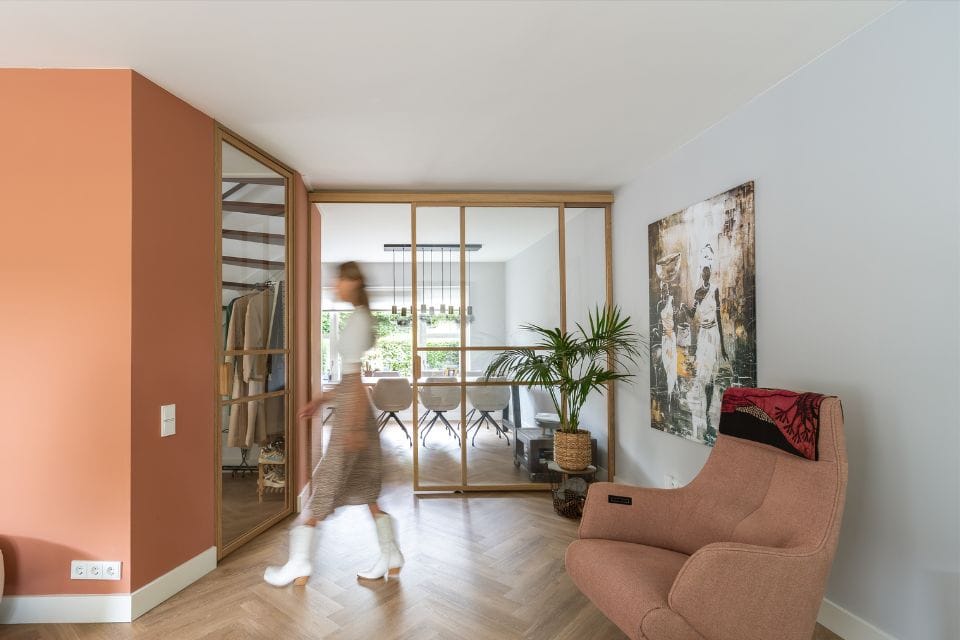
Wood or aluminium – both are excellent choices for an interior door. Which one suits you best depends on your interior design, how much maintenance you’re willing to do, and your budget.
| 14-07-2026 | |
| Reading time: 4 minutes | |
| Materials, glass and colour |

Aluminium or wood: what really matters
Is aluminium or wood The best choice for your new doors? Wood adds warmth and creates a familiar, natural atmosphere. Aluminium It’s sleek, slim and low-maintenance. We’ve set out the differences for you honestly, highlighting both the strengths and weaknesses of each material. We’ve simply laid out the facts side by side, so you can weigh them up for yourself.
Aluminium versus wood at a glance
The table below shows at a glance how wood and aluminium compare on the points that really matter: appearance, maintenance, lifespan, insulation, dimensional stability and choice of colour:
| Aspect | Wood | Aluminium |
| Appearance | Warm and natural | Sleek, slim and modern |
| Maintenance | Varnishing or painting from time to time | Low maintenance, just cleaning |
| Service life | Long, provided it is well maintained | Long-lasting, rust-proof and colourfast |
| Insulation | Naturally dampens heat and sound | Conducts heat more quickly |
| Dimensional stability | May warp or bend when exposed to moisture | Retains its shape, does not warp |
| Choice of colour | More limited, depending on whether it is paint or wood stain | Almost any RAL colour |
| Price | Lower entry-level price in the entry-level segment | Higher entry-level price |
| Bespoke | Perhaps, but slim profiles are tricky | Fully bespoke, with slim profiles |
The advantages of a wooden interior door
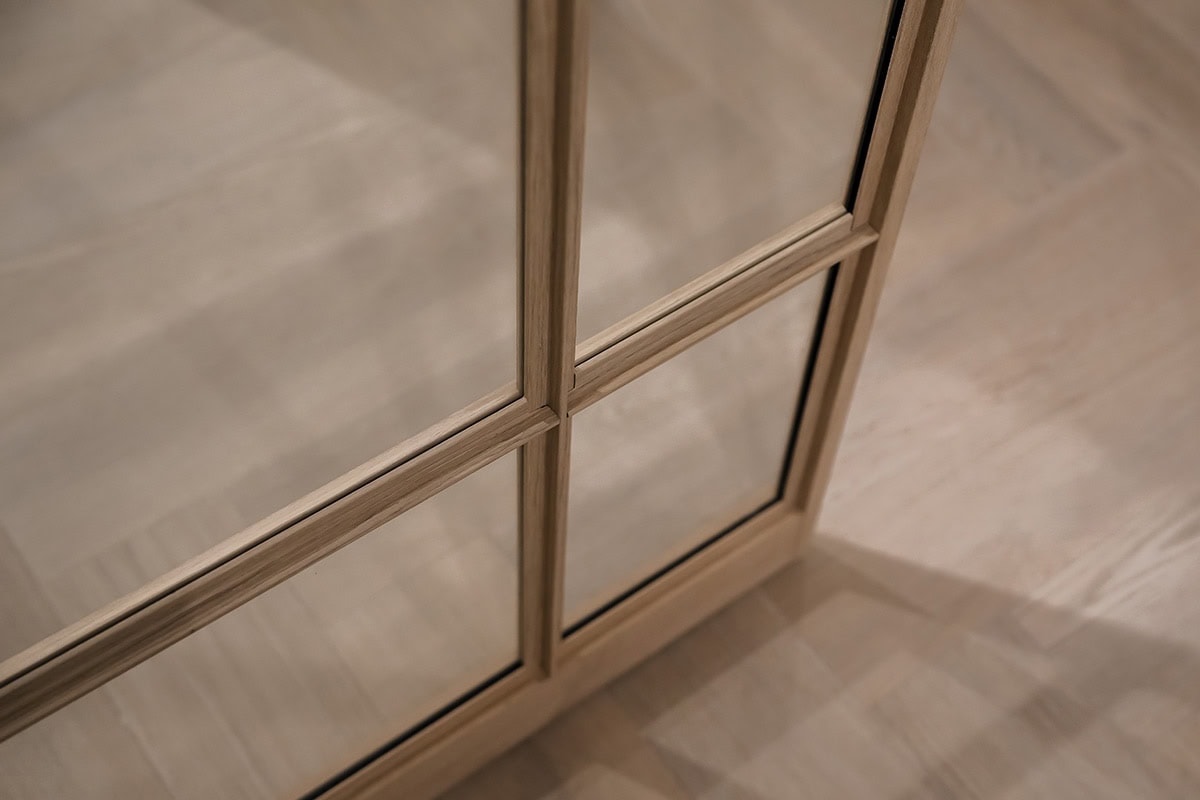
Wood has something that aluminium cannot easily replicate: a warm, natural look. Every door has its own grain and pattern, which quickly gives your home a familiar and cosy feel.
Solid wood also naturally insulates against heat and sound slightly better than a slim aluminium frame with a lot of glass. In the entry-level segment, the starting price for a wooden door is often lower, particularly for standard sizes. If your door gets scratched over time, or if you fancy a different colour, you can simply sand and repaint the wood. You don’t have to buy a new door straight away.
The disadvantages of a wooden interior door
Wood reacts to its surroundings, and that can sometimes be a problem. Exposure to damp and fluctuating temperatures can cause a wooden door to ‘expand and contract’ or warp slightly, meaning that after a while it no longer closes as smoothly. Keeping wood looking its best requires regular maintenance.
Clean the door from time to time and touch up the paintwork as soon as it starts to wear. Wooden doors usually need a full repaint after about seven years. In a damp room such as the bathroom, this will be needed a little sooner.
Do you want a sleek, streamlined look with lots of glass and slim profiles? If so, you’ll soon find that wood has its limitations, as it isn’t well suited to such slim profiles.
The advantages of an aluminium interior door
Aluminium excels in areas where wood struggles. Aluminium does not rust or warp, even in damp conditions. This ensures your door will close properly for years to come. Our doors are not welded but feature solid profiles, meaning there are no visible welds. This gives them a clean, sleek line.
Choose from just about every RAL colour. As each door is made to measure and aluminium is fully recyclable, you’re choosing a sustainable door that will last a long time.
The honest downsides of an aluminium interior door
Aluminium also has its drawbacks. The starting price for this material is higher than that of many types of wood, so if you’re on a tight budget, wood is sometimes the more logical choice after all. Aluminium conducts heat more quickly than wood, meaning an aluminium door feels cooler to the touch and allows temperature differences between two rooms to be felt slightly more easily. Wood naturally feels a little warmer.
Untreated aluminium may oxidise or develop water stains over time. The material then takes on a dull or mottled appearance. That is why Aluwdoors doors always feature stainless steel components and are finished with a baked-on Axalta powder coating. This coating is baked onto the profile at the factory. The coating is highly scratch-resistant and retains its colour, so you’ll never need to paint the door.
Which material is right for you?
Ultimately, the choice depends on what matters most to you. Are you looking for a warm, classic feel, or are you on a slightly tighter budget? If so, a wooden door is an excellent choice. Do you want a door with a sleek, modern or industrial look, that’s low-maintenance and made to measure? In that case, aluminium is the better option.
Still not sure? We understand – after all, a door is a key feature of your home. Feel free to come and see the materials for yourself at one of our showrooms. You can find us at Nunspeet, Barendrecht, Mijdrecht and Veghel. Would you like to explore the possibilities from home? You can do so in the configurator.
| 14-07-2026 | |
| Reading time: 4 minutes | |
| Materials, glass and colour |
 Dutch
Dutch English