Fitting a pivot door with underfloor heating: here’s how it works
Do you want a Have a solid wood door fitted in combination with underfloor heating? You might be wondering whether that’s actually possible, given that it involves drilling into the floor. Good news: in almost all cases, you can safely have a pivot door fitted even if you have underfloor heating.
| 14-07-2026 | |
| Reading time: 4 minutes | |
| Materials, glass and colour |

Can a pivot door be fitted alongside underfloor heating?
In most cases, this is possible. When fitting a pivot door, you only need to drill one centimetre deep into the floor. The pipes for your underfloor heating are almost always laid deeper, so they remain out of the way. Are you unsure about your situation? Our fitters always check this when taking measurements, so you can be sure everything will be fine.
Why this combination raises questions
The question of whether a pivot door can be fitted alongside underfloor heating comes up frequently, and that makes sense. A pivot door It does not pivot on hinges at the sides, but on a pivot point set in the ceiling and the floor. The underfloor heating pipes are also laid in the floor. It is therefore quite understandable to think that drilling and heating pipes do not mix well. In practice, it’s not as bad as it sounds, as long as the pivot point is positioned in the right place and not too deep. That is precisely what we take into account during installation.
This is how Aluwdoors installs a pivot door with underfloor heating
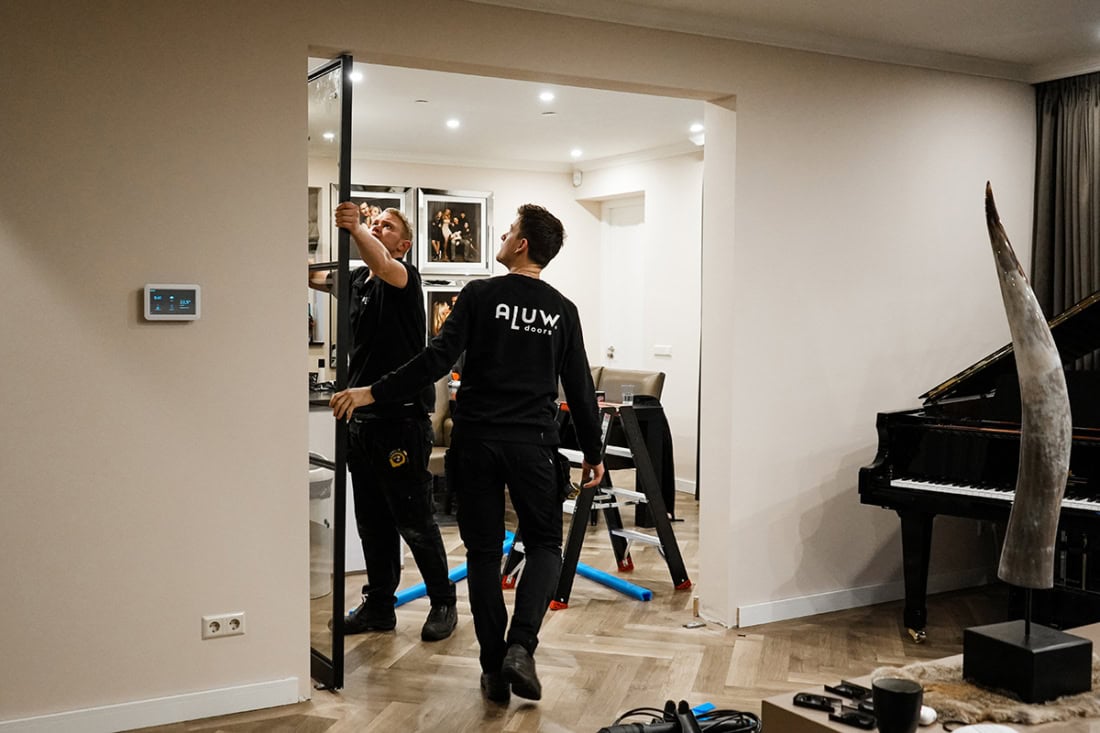
Our fitters will adjust the position of your pivot door’s pivot point to suit your underfloor heating. They’ll determine where drilling can take place, taking the pipes into account, and will drill as little as possible. You don’t need to worry about a thing, as we’ll take care of all the measuring and installation for you.
First, map out the pipes
Before drilling, it is important to know exactly where the heating pipes are located. This ensures that the pivot point is in a safe place, out of reach of the pipes. In new-builds or renovation projects, it is often clear where the pipes are located, for example from the building plans. Otherwise, check with the installer. Has the underfloor heating been in place for some time and are you unsure exactly where the pipes run? In that case, our fitters will assess on site where they can drill safely.
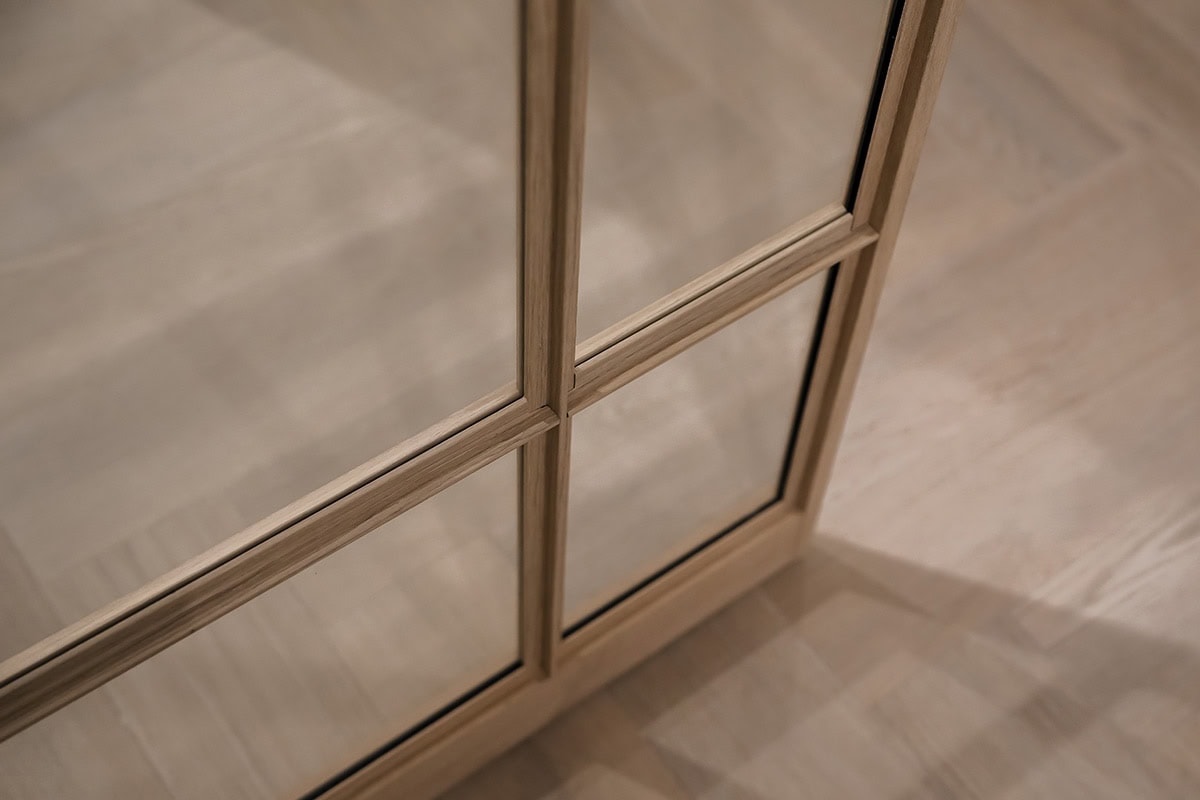
Drill to a depth of just about one centimetre thanks to our system
The main advantage of Aluwdoors’s pivot doors lies in the mechanism itself. With our doors, the locking mechanism in the door frame, in the high bottom rail at the bottom of the door. This means that the hole in the floor only needs to be about one centimetre deep. As underfloor heating is usually laid much deeper, there is plenty of space left for drilling. At the top of the door, the mechanism is anchored approximately four centimetres into the ceiling. The ceiling must be sturdy enough to allow the mechanism to be screwed into it. Ceilings made of concrete, stone or timber are usually sturdy enough. A plasterboard ceiling requires additional reinforcement.
What if a pipe is situated exactly at the pivot point?
Very occasionally, a heating pipe is situated exactly where the pivot point of the pivot door is supposed to be. Even then, there is almost always a solution. For example, the door’s pivot point can be moved slightly, or we can use a modified mounting bracket that requires drilling to an even shallower depth.
The engineers will determine the best solution for your situation on site. They always do this in consultation with you. This ensures that the underfloor heating remains intact and is running the door still opens and closes smoothly.
Don’t have underfloor heating yet? Bear this in mind
Are you planning to have underfloor heating fitted in the future, but already know that you want to have a pivot door installed now? If so, make sure you take the underfloor heating into account right from the start. Mark out the position of your door’s pivot point in advance and leave a space of about ten to fifteen centimetres around it for the underfloor heating pipes. Make sure to discuss this with your installer and with us as well; this will prevent any problems. Don’t forget to keep this space clear in future too.
Does a pivot door cause heat loss?
Is heat loss through a pivot door not as bad as you might think? Yes. Because a pivot door has no frame and no threshold, warm air can circulate freely underneath it. A standard hinged door in a sealed frame, on the other hand, tends to block that airflow more effectively. This is beneficial for your underfloor heating, as it allows the heat to spread more easily throughout the room. To be fair, though, because there is no frame around it, a small gap may remain, depending on the finish. The difference isn’t significant, and with a proper adjustment, it remains minimal.
Not sure whether a pivot door will suit your floor? Tell us about your situation and we’ll help you work it out. Design your own door in our online configurator. Are you having trouble? You’re very welcome to visit our showroom, to see pivot doors in person. We are based in Nunspeet, Barendrecht, Mijdrecht and Veghel.
| 14-07-2026 | |
| Reading time: 4 minutes | |
| Materials, glass and colour |
 Dutch
Dutch English